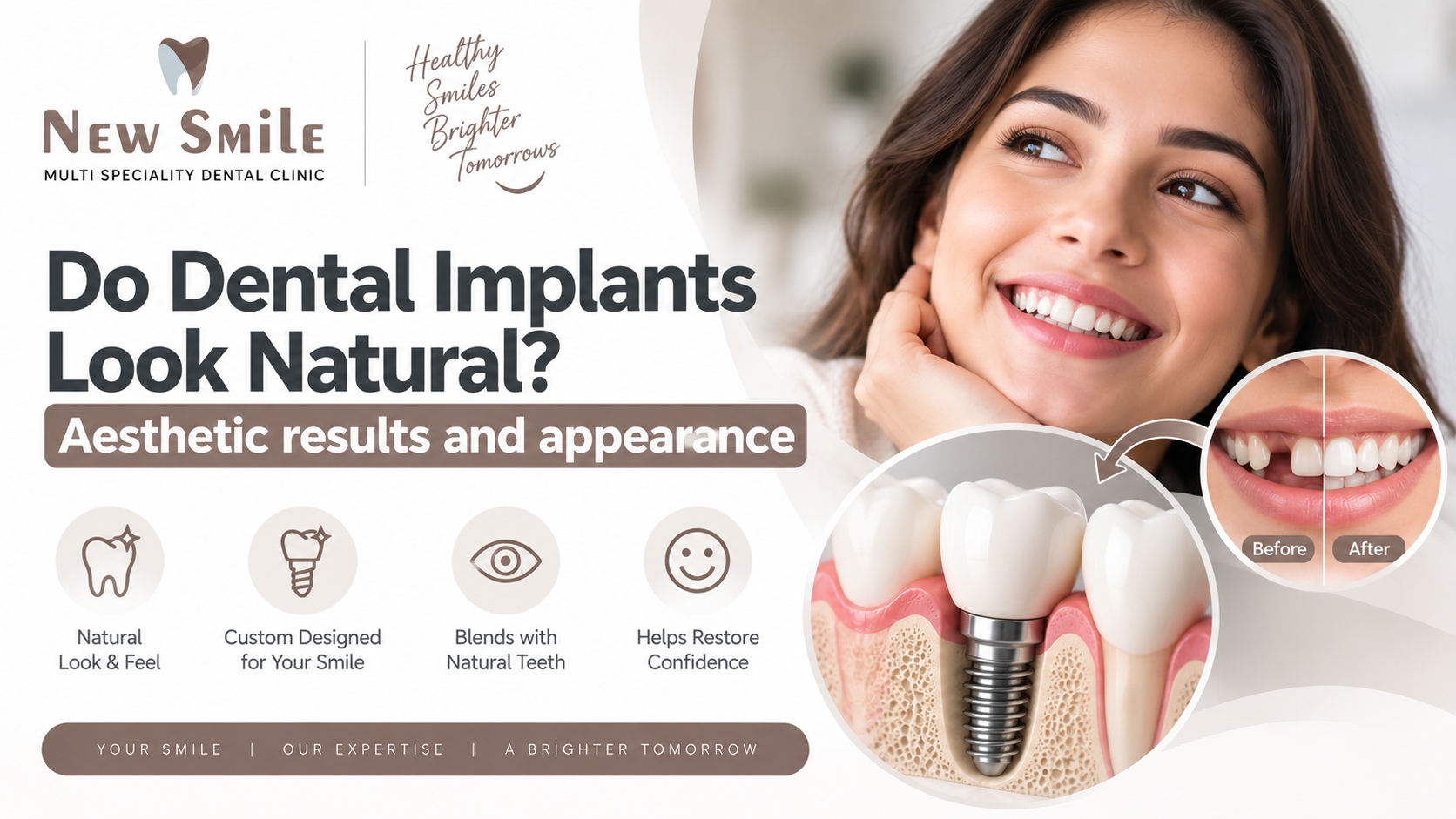
Do Dental Implants Look Natural? Aesthetic Results and Appearance
When facing tooth loss, one of the most common hesitations patients share during a clinical consultation is whether the replacement will look artificial. A missing tooth can impact chewing comfort, speech clarity, and self-esteem, but no one wants a replacement that draws unwanted attention. If you are asking whether dental implants look natural, the short answer is yes—modern implant dentistry focuses just as much on lifelike aesthetics as it does on mechanical stability. At New Smile Multispeciality Dental Clinic in Ahmedabad, we regularly reassure patients that with meticulous 3D planning, anatomical tissue management, and custom prosthetics, modern dental implants can closely replicate the beauty, translucency, and emergence profile of healthy biological teeth.
Quick Summary: Dental implants do not look like artificial plastic teeth. The visible crown is custom-milled from medical-grade ceramic or zirconia, color-matched to your surrounding teeth, and sculpted to emerge through the gumline just like a natural tooth root. When planned and placed by an experienced dental team, most people cannot distinguish an implant restoration from your genuine teeth.
Do Dental Implants Look Natural?
Yes, modern dental implants can be designed to closely mimic the appearance of natural teeth. However, achieving an authentically lifelike result is neither accidental nor automatic. A dental implant is not an off-the-shelf product; it is a personalized clinical reconstruction consisting of a titanium or zirconia root foundation anchored inside the jawbone, connected to a custom-crafted ceramic crown.
According to the American Dental Association (ADA), dental implants integrate directly with your living jawbone, providing an immovable foundation that allows the visible replacement tooth to emerge naturally without hooks or clasps. When patients observe an implant restoration that appears noticeably artificial, it is usually because the tooth was crafted with a flat, opaque shade, incorrect proportions, or placed without adequate soft-tissue (gum) support. Conversely, when an implant is positioned three-dimensionally with precision and paired with high-translucency restorative ceramics, it blends harmoniously with your natural smile. While individual anatomical variations mean absolute cosmetic perfection cannot be guaranteed for every case, contemporary implantology consistently delivers realistic dental implants that allow you to laugh, converse, and smile with total confidence.
What Makes a Dental Implant Look Natural?
The human eye is remarkably perceptive when evaluating facial symmetry and smiles. For a tooth replacement to be perceived as authentic, several delicate optical, biological, and architectural factors must align seamlessly.
Natural Tooth Color and Shade
Natural teeth are rarely pure, uniform white. Biological enamel displays subtle gradations—the neck (cervical area) of a tooth near the gumline is generally warmer and slightly darker, while the biting edge (incisal edge) is lighter and semi-translucent. When creating natural looking dental implants, your dental team uses multi-point shade guides, digital spectrophotometers, and clinical photography under standardized daylight conditions. Rather than selecting an unnaturally stark shade that stands out, the restoration is matched precisely to the chroma, value, and hue of your adjacent teeth.
Tooth Shape and Proportion
Every individual’s teeth possess distinct anatomical contours, surface micro-textures, and developmental ridges. If an implant-supported crown is even one millimeter too broad, narrow, or flat, it can disrupt the visual rhythm of your smile. Dental laboratories use micro-measurements of your contralateral (opposite side) teeth to replicate width-to-length proportions, contact points, and subtle surface grooves, ensuring symmetrical harmony across your dental arch.
Translucency and Light Reflection
Biological enamel is a crystalline structure that absorbs, refracts, and transmits light. Early dental crowns made of porcelain-fused-to-metal (PFM) often looked lifeless or chalky because the underlying metal substructure blocked light transmission. Today’s cosmetic dental restorations utilize advanced monolithic zirconia or lithium disilicate (E-max) ceramics. These materials allow ambient light to penetrate the surface and bounce back naturally, mimicking the optical depth and vitality of real enamel.
Gum Contour and the Emergence Profile
A natural tooth does not simply sit on top of the gums; it emerges gracefully from beneath the gum tissue, framed by gentle arches of pink tissue and pointed triangular gum peaks known as interdental papillae. If the surrounding gum line is flat, recessed, or asymmetrical, even a masterfully crafted crown can look out of place. Proper soft-tissue shaping using customized healing abutments or temporary crowns ensures the final crown has an authentic "emergence profile."
Correct Implant Position
The visible tooth is only as aesthetic as the foundation underneath it. An implant placed too far forward (buccally) can cause the delicate outer bone and gum tissue to recede over time, revealing metallic margins or creating an elongated tooth appearance. An implant positioned too deeply or angled incorrectly complicates crown fabrication. Precise, prosthetically driven 3D positioning ensures that the crown emerges at the ideal anatomical angle.
What Does a Dental Implant Actually Look Like?
Patients are often surprised to learn that what the public refers to as an "implant" is actually a three-part medical system. The component placed in your bone is never visible once your treatment is complete.
| Component | Location & Material | Visual Appearance |
|---|---|---|
| 1. Implant Fixture | Surgically placed within the jawbone; medical-grade titanium or zirconia screw. | Completely hidden beneath the gums and bone. Serves strictly as an artificial tooth root. |
| 2. Abutment | Secured into the implant; titanium, gold-hue alloy, or tooth-colored zirconia. | Hidden under the crown. For front teeth, tooth-colored zirconia abutments prevent any dark shadows under thin gums. |
| 3. Dental Implant Crown | Attached over the abutment; high-strength ceramic, porcelain, or zirconia. | The only visible portion. Sculpted and glazed to match the exact color, shape, and shine of adjacent natural teeth. |
Can Dental Implants Look Like Your Natural Teeth?
The objective of comprehensive aesthetic dentistry is not simply to place a bright white tooth in an empty socket, but to integrate a restoration so seamlessly that it complements your unique facial characteristics. During a comprehensive evaluation for dental implant treatment in Ahmedabad, experienced clinicians evaluate:
- Your Smile Line: When you smile broadly, how much of your gumline shows? High smile lines reveal more gum tissue and demand extra aesthetic attention around the tissue collar.
- Adjacent Tooth Anatomy: Natural wear facets, tiny vertical craze lines, and incisal edges are intentionally incorporated into the restoration so it does not look like a generic replacement.
- Facial Proportions and Midline: The central vertical axis of the restoration must align harmoniously with your facial midline, lip curvature, and interpupillary line.
- Occlusion (Bite Dynamics): How your upper and lower teeth meet influences both long-term structural longevity and the natural contouring of the crown's biting surfaces.
By treating the tooth as an interconnected part of your broader facial harmony, modern dental implant restorations achieve an authentic aesthetic balance.
Are Dental Implants Noticeable?
In the vast majority of well-executed treatments, dental implants are virtually unnoticeable to friends, family, and colleagues during regular conversation or dining. People see an attractive, uniform smile rather than a dental device.
However, there are clinical scenarios where an implant might appear less natural. Understanding these challenges highlights why selecting an experienced surgical and restorative team is crucial:
- Inadequate Bone or Soft-Tissue Volume: When a tooth has been missing for an extended period, the surrounding jawbone naturally resorbs. Placing an implant without addressing this deficit can lead to gum recession or a noticeably elongated crown.
- Suboptimal Angulation or Position: An implant placed too shallowly or with improper tilt can create difficulty in designing a natural emergence profile, sometimes leaving visible metallic margins near the gumline.
- Color Mismatch or Excessive Opacity: If the restorative material lacks proper translucency or was shaded without accounting for surrounding teeth, it can look noticeably dull or chalky under daylight.
- Loss of Interdental Papilla: The delicate triangle of gum between teeth can sometimes be lost after extraction, creating small spaces colloquially referred to as "black triangles." Careful tissue preservation techniques are used to minimize this risk.
Do Front Tooth Dental Implants Look Natural?
Replacing an incisor or canine in the aesthetic zone—the front portion of your mouth visible when you talk and smile—represents one of the most demanding disciplines in modern restorative dentistry. Patients frequently ask specifically about front tooth dental implants because visual scrutiny here is exceptionally high.
Yes, front tooth implants can look wonderfully natural, but they require a heightened level of planning:
- Zirconia or Custom Abutments: In the front of the mouth, thin gum tissue can sometimes allow standard gray titanium abutments to cast a subtle bluish shadow through the gumline. Using custom tooth-colored zirconia abutments completely prevents this issue.
- Surgical Soft-Tissue Preservation: Maintaining the natural height of the gum tissue and interdental papillae is critical. Advanced techniques such as socket preservation bone grafting or connective tissue grafts are often utilized during or after extraction to maintain natural gum architecture.
- Provisional (Temporary) Sculpting: Before the final crown is placed, a temporary custom crown is often worn for several weeks to train and shape the healing gum tissue into a natural, scalloped contour.
When these steps are executed carefully by a skilled dental implant dentist in Ahmedabad, a front tooth implant blends seamlessly alongside your neighboring natural teeth.
Dental Implants vs Natural Teeth: What Is the Difference?
While an implant-supported crown is engineered to visually emulate a natural tooth, implants and natural teeth are fundamentally distinct biological structures. As clinical guidelines from the National Institute of Dental and Craniofacial Research (NIDCR) highlight, maintaining tooth-supporting bone and tissue architecture is critical whether protecting natural teeth or integrating implants.
| Feature | Natural Biological Tooth | Dental Implant Restoration |
|---|---|---|
| Visual Appearance | Natural enamel with intrinsic depth, translucency, and individualized anatomy. | Custom ceramic/zirconia crafted to closely replicate the color, contours, and optical qualities of adjacent teeth. |
| Root Structure | Organic dentin and cementum root anchored via the periodontal ligament (PDL). | Biocompatible titanium or zirconia screw integrated directly into the bone (osseointegration). |
| Sensory Perception | Contains nerves in the pulp and PDL that register temperature, pain, and light biting pressure. | No internal nerve; sensory feedback occurs through surrounding jawbone proprioception. |
| Susceptibility to Cavities | Vulnerable to bacterial dental caries (prevented via oral care and root canal treatments when infected). | Immune to tooth decay. However, surrounding gums and bone remain vulnerable to peri-implantitis. |
| Gum Attachment | Perpendicular collagen fibers insert directly into cementum, creating a strong biological seal. | Parallel circular mucosal seal around the abutment, requiring gentle, consistent hygiene care. |
| Chewing Function | 100% natural bite efficiency. | Restores near-equivalent natural chewing efficiency, far superior to removable alternatives. |
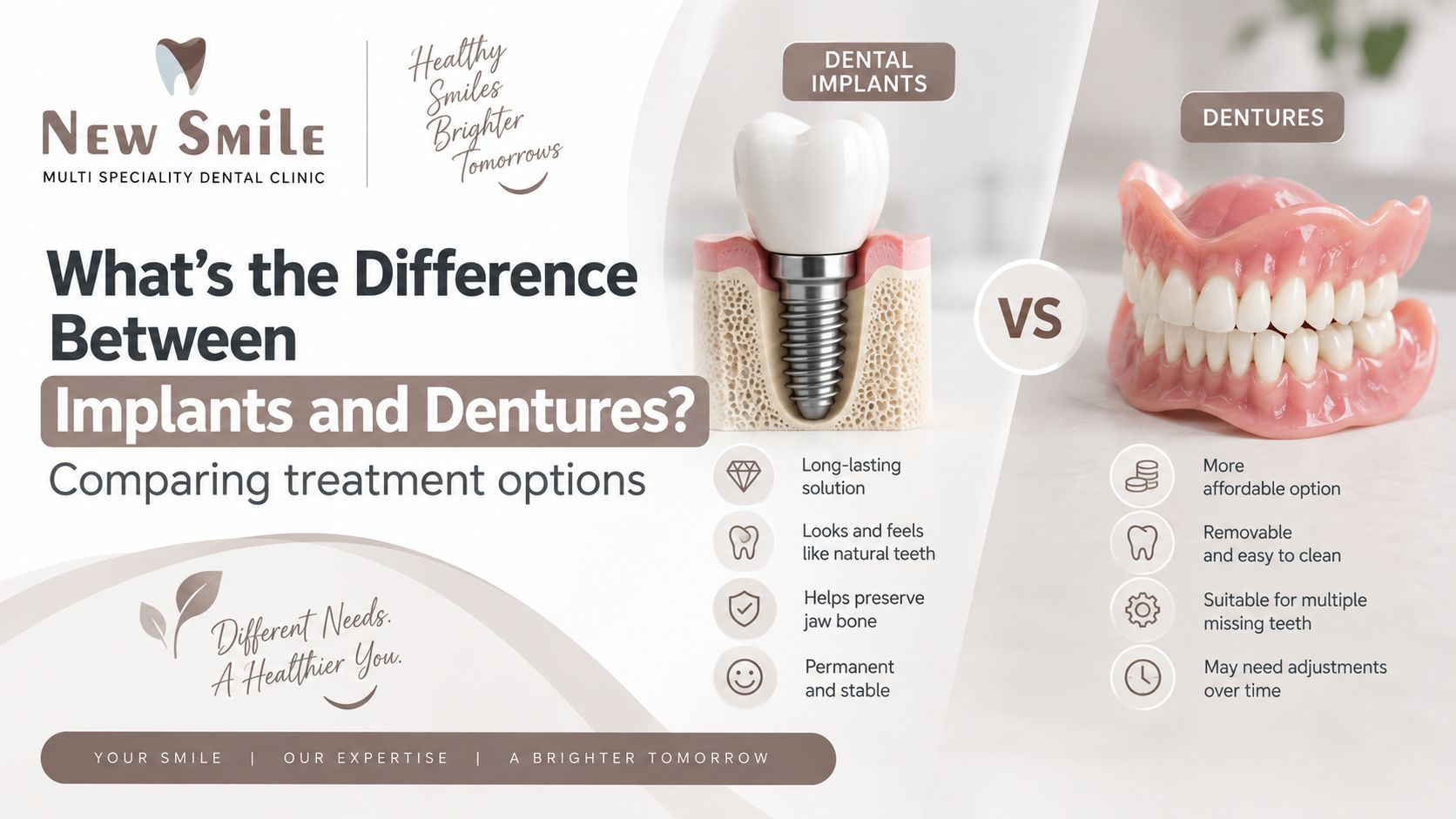
Dental Implants vs Dentures: Which Looks More Natural?
When weighing options for replacing missing teeth, patients often compare fixed dental implants with conventional removable dentures. While modern prosthodontics has substantially improved the aesthetics of both treatments, there are noticeable structural differences in how they appear in daily life.
- Absence of Artificial Acrylic Flanges: Traditional complete or partial dentures rely on pink acrylic bases that rest directly on the gums or palate to stay in place. In contrast, an implant-supported crown emerges directly from your natural gums, eliminating bulky acrylic borders.
- Retention and Facial Support: Because dentures rest on the soft tissues, they can occasionally shift, slip, or click during vigorous chewing or speaking, creating patient self-consciousness. Dental implants are permanently integrated into bone, offering complete positional stability.
- Preservation of Facial Structure: When natural teeth are lost, the jawbone in that area slowly shrinks over time because it no longer receives chewing stimulation. Removable dentures do not stimulate the jawbone, which can lead to facial collapse, thinned lips, and premature wrinkles. Implants provide ongoing biomechanical stimulation, helping preserve bone volume and youthful facial contours.
That said, dentures remain a valid, non-surgical, and cost-effective treatment choice for many patients depending on medical history, bone availability, and personal preference. An individualized clinical consultation helps determine which solution aligns best with your oral health goals.
What Can Affect the Aesthetic Result of Dental Implants?
Achieving realistic dental implants depends on a confluence of clinical, anatomical, and patient-specific variables:
- Initial Bone Volume: Without adequate height and width of alveolar bone, an implant cannot be placed in the ideal 3D biological position without bone grafting procedures.
- Gum Biotype and Health: Patients with thick, fibrous gum tissue naturally enjoy better masking of underlying restorative parts than those with thin, delicate gum biotypes prone to recession. Active periodontal disease must always be fully treated before implant therapy.
- Restorative Material Selection: The choice between monolithic zirconia, layered porcelain, or lithium disilicate affects surface brightness, translucency, and resistance to chipping.
- Dental Laboratory Craftsmanship: The final crown is hand-finished or digitally sculpted by experienced dental ceramists who understand how to apply micro-staining, surface texturing, and glaze to mimic natural enamel.
- Bite Alignment and Bruxism: Heavy teeth grinding or irregular bite forces can cause premature wear on the restoration or strain the surrounding bone, requiring bite adjustments or protective nightguards.
- Lifestyle Habits and Tobacco Use: Smoking and tobacco use significantly impair local microcirculation, elevate the risk of implant complications, and can cause chronic gum inflammation that degrades aesthetic margins over time.
How Long Does It Take to Get the Final Natural-Looking Tooth?
Achieving an authentic, durable implant restoration is a phased process that prioritizes biological healing over haste. As noted in the Cleveland Clinic’s clinical overview of dental implants, adequate healing time allows bone cells to securely anchor the titanium fixture before it is subjected to everyday biting pressures. The journey generally follows these stages:
- Initial Examination & 3D Imaging: Comprehensive clinical examination, digital scans, and low-dose Cone Beam Computed Tomography (CBCT) to evaluate bone density, nerve pathways, and aesthetic parameters.
- Treatment Planning: Digital smile design and surgical guide preparation to map the precise angulation, depth, and rotational position of the implant fixture.
- Implant Placement (Surgical Phase): Gentle placement of the implant fixture into the jawbone. If required, bone grafting or sinus augmentation may be performed concurrently.
- Healing and Osseointegration: A critical healing period—typically lasting 3 to 6 months—during which bone cells grow directly into the microscopic pores of the implant surface, creating a permanent structural bond. (A temporary aesthetic tooth can often be provided so you never have an empty space.)
- Abutment Connection & Soft-Tissue Shaping: The implant is uncovered (if submerged), and an abutment is connected to shape the emerging gum collar.
- Digital Impressions & Final Crown Placement: High-precision digital impressions capture the exact position of the implant. The custom ceramic crown is fabricated, shade-checked, adjusted, and permanently secured.
How Long Do Dental Implants Stay Looking Natural?
One of the chief advantages of dental implant therapy is its outstanding long-term durability. The biocompatible implant fixture integrated into your jawbone can remain stable for decades or even a lifetime with proper maintenance.
However, it is important to distinguish between the implant fixture in the bone and the visible crown above the gumline:
- The Crown Component: High-grade ceramic and zirconia crowns are exceptionally durable and resistant to staining from coffee, tea, and everyday foods. Under normal chewing conditions, modern crowns typically retain their beauty and structural integrity for 10 to 15 years or longer before minor maintenance, re-polishing, or replacement might be considered due to natural wear.
- The Surrounding Gum Tissue: Just like with biological teeth, gums around implants can recede if neglected or subjected to harsh aggressive brushing. Maintaining healthy pink tissue around the restoration is essential to keeping the tooth looking completely natural over the years.
How to Maintain the Natural Appearance of Dental Implants
Protecting the aesthetic investment of your implant restoration requires consistent, thoughtful daily care:
- Brush Twice Daily with a Soft-Bristled Brush: Clean thoroughly around the crown margin using non-abrasive fluoride toothpaste to prevent microscopic scratches on the glazed ceramic surface.
- Clean Interdental Spaces Daily: Use dental floss, specialized implant floss, or an interdental brush with nylon-coated wire to clear plaque from between the implant crown and neighboring teeth.
- Use a Water Flosser: Oral irrigators are particularly gentle and effective at flushing debris from the delicate gum cuff around implant abutments.
- Schedule Regular Dental Checkups and Cleanings: Visit your dental clinic in Ahmedabad every six months. Professional cleanings using specialized non-metallic scalers prevent plaque calcification without scratching the titanium or zirconia surfaces.
- Avoid Chewing Hard Non-Food Objects: Refrain from biting on ice, pens, hard candy, or opening packages with your teeth, which can chip both natural enamel and ceramic restorations.
- Address Nighttime Teeth Grinding: If you clench or grind your teeth during sleep, request a custom-fitted nightguard to protect the ceramic crown from excessive nocturnal bite forces.
How Much Do Natural-Looking Dental Implants Cost in Ahmedabad?
When researching dental implants in Ahmedabad, patients frequently look for exact price figures. In transparent, ethical healthcare, it is impossible to quote a universal price without examining the patient, because implant therapy is strictly customized to your unique oral anatomy.
The total cost of your dental implant treatment in Ahmedabad is shaped by several distinct clinical factors:
- Number and Position of Missing Teeth: A single back molar restoration has different biomechanical and aesthetic requirements than multiple missing teeth or a visible front tooth.
- Implant Brand and System: Internationally validated implant systems with extensive long-term clinical research vary in manufacturing precision and surface treatments.
- Restorative Material: Standard porcelain-fused-to-metal crowns, monolithic zirconia, and premium multilayered translucent ceramics have varying laboratory costs.
- Need for Supplemental Procedures: If a tooth has been missing for years, treatments such as socket bone grafting, sinus lifts, or soft-tissue contouring may be necessary to ensure long-term stability and aesthetics.
- Diagnostic Technology Used: Incorporating low-dose 3D CBCT scans, digital intraoral scanning, and computer-guided surgical stents improves placement accuracy and safety.
To receive an accurate, itemized financial estimate, we recommend scheduling an in-person clinical assessment where our specialists can evaluate your bone structure and present personalized treatment options.
How to Choose a Dental Implant Dentist in Ahmedabad
The long-term aesthetic and biological success of an implant restoration depends heavily on the diagnostic expertise and restorative craftsmanship of your dental team. When selecting a dental implant dentist in Ahmedabad, consider the following criteria:
- Specialized Clinical Training: Look for clinicians with dedicated postgraduate training in oral implantology, prosthodontics, or periodontics who understand both the surgical and aesthetic aspects of tooth replacement.
- Comprehensive 3D Diagnostic Planning: High-standard clinics utilize digital intraoral scanners and CBCT imaging to virtually plan implant placement before touching a surgical instrument.
- Focus on Soft-Tissue Architecture: A knowledgeable clinician pays equal attention to gum health, contouring, and emergence profile, not just inserting a metal fixture into bone.
- Sterilization and Clinical Protocols: Ensure the clinic adheres to strict international sterilization standards and uses genuine, traceable implant components backed by manufacturer documentation.
- Transparent Communication: Your dentist should clearly explain all treatment alternatives, realistic timelines, potential risks, and maintenance requirements without high-pressure sales tactics.
Why Choose New Smile Multispeciality Dental Clinic for Dental Implants?
At New Smile Multispeciality Dental Clinic in Ahmedabad, Gujarat, we view dental implantology as a harmonious fusion of biological science, precision engineering, and facial aesthetics. Whether you are replacing a single front tooth or restoring full chewing function, our team is dedicated to providing personalized, patient-first care.
When you visit New Smile for dental implant consultations, you benefit from:
- Multispeciality Collaboration: Our clinical approach integrates restorative, surgical, and aesthetic perspectives under one roof, ensuring your final crown is both biologically stable and visually natural.
- Modern Digital Dentistry: From precision digital diagnostics to custom-milled restorations, we utilize advanced dental protocols designed to maximize comfort and aesthetic accuracy.
- Personalized Aesthetic Matching: We take the time to evaluate your smile line, skin tone, facial proportions, and adjacent tooth anatomy so your new tooth blends effortlessly with your smile.
- Comfort-Focused Care: We prioritize gentle techniques, clear communication, and a compassionate clinical environment to ensure your treatment experience is as calm and stress-free as possible.
Frequently Asked Questions About Dental Implant Appearance
1. Do dental implants look natural?
Yes. Modern dental implants are custom-designed with high-grade ceramics or zirconia to closely mirror the color, shape, translucency, and light reflection of genuine teeth, making them blend naturally with your smile.
2. Can people tell if you have a dental implant?
In well-planned treatments, casual observers and family members cannot tell the difference. The visible crown emerges directly from your gum tissue just like a biological tooth.
3. Do dental implants look like real teeth?
Yes. While an implant lacks the biological interior of a tooth (like pulp nerves or dentin), its exterior visible portion is hand-characterized with subtle anatomical grooves and shading to replicate real enamel.
4. Do front tooth implants look natural?
Yes, front tooth implants can look exceptionally natural. They require meticulous planning of gum contours, tooth-colored zirconia abutments, and high-translucency ceramic crowns to match the visible smile zone.
5. What makes a dental implant look natural?
A natural appearance relies on five key factors: accurate shade matching, lifelike translucency, anatomical tooth proportions, healthy scalloped gum contours, and precise 3D implant positioning within the jawbone.
6. Can the color of an implant crown be matched to natural teeth?
Yes. Dentists use standardized shade guides, digital color analysis, and cross-polarized clinical photos to match the restoration to the exact hue, value, and warmth of your neighboring teeth.
7. Can dental implants look too white?
An implant crown can look unnaturally white only if a monochromatic, overly bright shade is chosen without considering adjacent teeth. Experienced dentists intentionally match the natural shade gradient of your surrounding smile.
8. Do dental implants change color?
High-quality dental ceramics and zirconia are non-porous and highly resistant to staining from coffee, tea, or food. However, surrounding natural teeth can yellow over time, making regular cleanings and care beneficial.
9. Do dental implants look natural after gum healing?
Yes. As soft tissues heal and stabilize around the custom healing abutment, the gum cuff creates a natural emergence profile that frames the crown just like biological gums frame a real tooth.
10. How long does it take to get the final implant crown?
The complete process typically takes 3 to 6 months to allow the implant fixture to securely fuse with the bone (osseointegration), though temporary aesthetic restorations are often provided during healing.
11. Are dental implants more natural-looking than dentures?
In most cases, yes. Implants emerge directly from the gums without the bulky pink acrylic bases, metal clasps, or movement associated with traditional removable dentures.
12. How much do dental implants cost in Ahmedabad?
The cost varies depending on the number of missing teeth, the implant brand, the crown material chosen, and whether supplemental bone grafting is needed. An in-person clinical exam provides an exact, transparent quote.
13. Can a dental implant replace a front tooth?
Yes. Single-tooth implants are widely considered the gold standard for replacing missing front teeth because they do not require grinding down healthy adjacent teeth, as traditional bridges do.
14. How do I choose a dentist for dental implants in Ahmedabad?
Look for a dental clinic with specialized implantology credentials, advanced 3D CBCT diagnostic planning, high sterilization standards, a strong focus on soft-tissue aesthetics, and transparent consultation protocols.
Conclusion: Restoring Your Smile with Natural Confidence
When planned with surgical precision and artistic craftsmanship, dental implants look natural, feel secure, and provide the functional strength needed to enjoy everyday life without hesitation. By harmonizing implant positioning, custom shade matching, lifelike ceramic translucency, and healthy gum contours, modern implantology offers a durable, authentic replacement for missing teeth.
If you are considering dental implants because of a missing tooth, a professional clinical evaluation can help determine whether implants are appropriate for your oral health and how your restoration can be designed to complement your natural smile. Contact New Smile Multispeciality Dental Clinic today to schedule a detailed aesthetic consultation and take the first step toward a complete, confident smile.